
FLIGHT DIARY 2026
EMMA
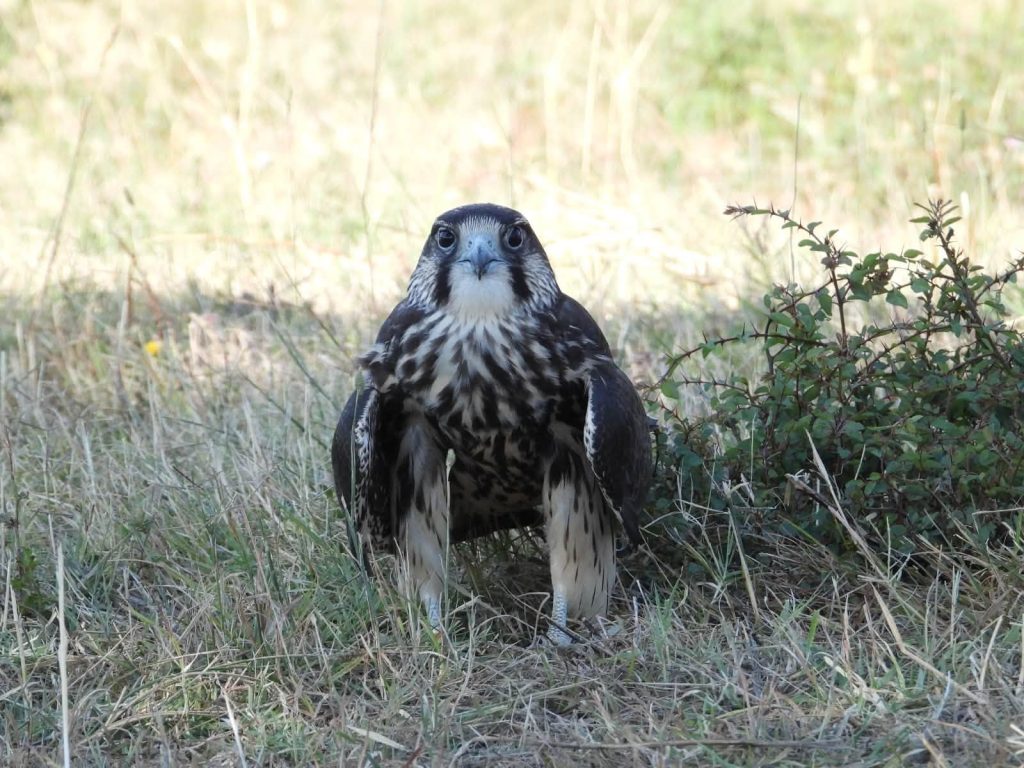
Emma was the first of the four young Lanner Falcons to leave the hacking area. From the earliest stages of her development, she had shown a behaviour different from that of her siblings, a trait she maintained throughout her stay in the release box: she was always the most elusive individual, less inclined to interact with the operators.
Unlike the other three young falcons—who, especially during the first weeks of freedom, would spontaneously return to the gradual‑release box—Emma stopped using it almost immediately. This behaviour seemed to confirm a stronger diffidence toward human presence.
However, the GPS data told an interesting story: Emma often spent several hours perched on the roof of the box where her siblings were kept safely inside during the night or when operators were not present. Her bond with the other young falcons, therefore, never faded, and thanks to this proximity she quickly developed competitive behaviour around food, often carrying prey away from the others and sharing it only rarely.
The warm July days created ideal conditions for learning to fly. Taking advantage of thermal currents, Emma and her siblings refined their skills, sharing the sky with other raptor species present in the area, such as Black Kites, Peregrine Falcons, Short‑toed Snake Eagles, and Common Kestrels.
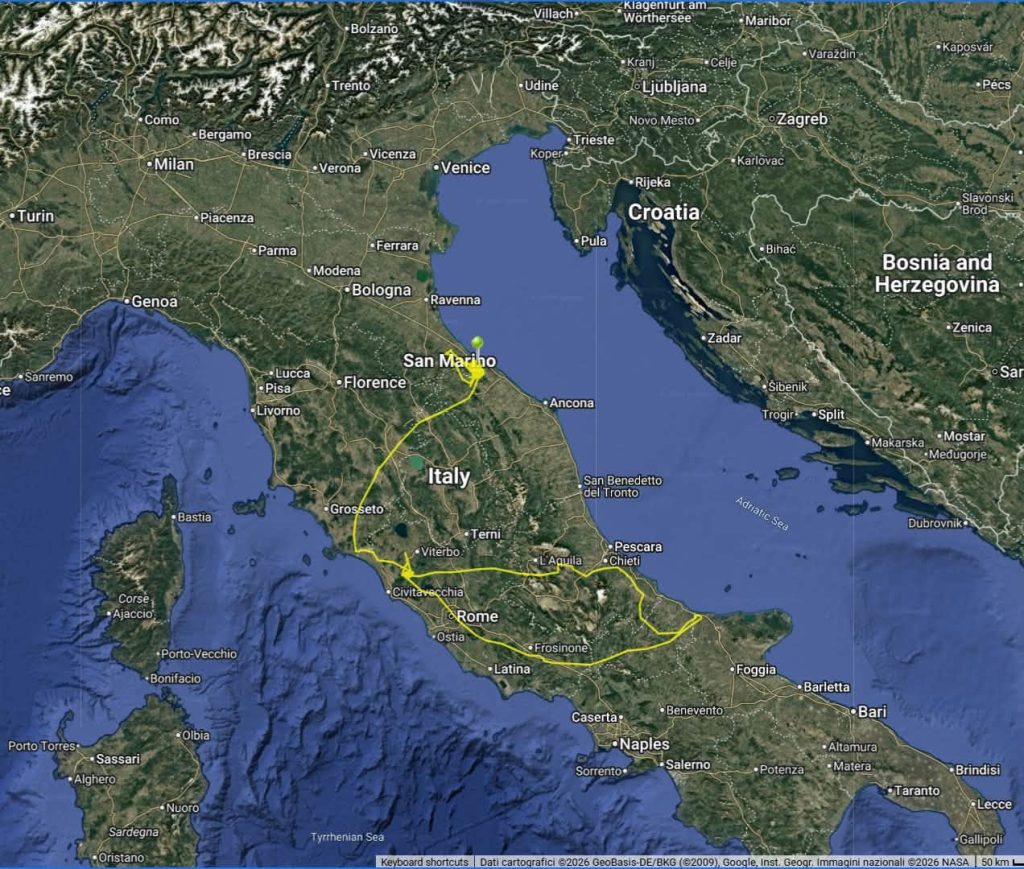
But soon the moment came for her first major journey. On a day in early July, Emma crossed the Apennines, reaching the border between Molise and Apulia—a now familiar destination, chosen over the years by several other Lanner Falcons released within the LIFE Lanner project.
After just two days, however, she reversed course, flying across southern Molise and quickly returning to the hacking area. Here she fed, refreshed herself in the water basins prepared for the young falcons, and after a few days set off again for a new exploration.
Emma’s return was particularly surprising. Over the years, it has been observed that young Lanner Falcons raised with this method may return to the release area even after being away for several days, but in her case the return was almost immediate. A behaviour suggesting that the hacking area represents a fundamental reference point during the dispersal phase.
Today, Emma is in the Pesaro area, a region also chosen in the past by other Lanner Falcons from the reintroduction programme—likely thanks to its wide open landscapes and abundant food resources.
Will she continue exploring new territories, return again to the release area, or settle here? We’ll find out, one GPS point at a time.
Would you like to learn more about the rearing and release process of young Lanner Falcons? You can download the Guidelines on the application of hacking techniques for the Lanner Falcon and other species for free via the link in our bio or on the official LIFE Lanner website.
 EN
EN  IT
IT