
Drusilla’s Flight: The Effectiveness of the Release Method
The year 2025 marks a major milestone in the conservation of the Lanner falcon (Falco biarmicus feldeggii). The five young individuals born at the breeding and reintroduction center are showing excellent progress, and their movements are providing valuable data on the release method used.
Drusilla, the first chick born this year, has offered a particularly compelling case study. After her release, she crossed the central Apennines, stopping first in Osimo (AN)—a location already known for the case of Calogero, a falcon tragically killed last October. She then flew over the Adriatic coast, reaching the Monte Genzana and Alto Gizio Regional Nature Reserve (AQ), continuing on to the Salinello Gorges (TE) and the Sibillini Mountains (MC).
Drusilla later crossed Emilia-Romagna, moved into Tuscany, and—unexpectedly—returned to Lazio, not far from her release site. Contrary to predictions, she did not settle in her original area but instead embarked on a new journey northward, reaching the inland territories of the Republic of San Marino—an area previously unexplored by other individuals of the species.
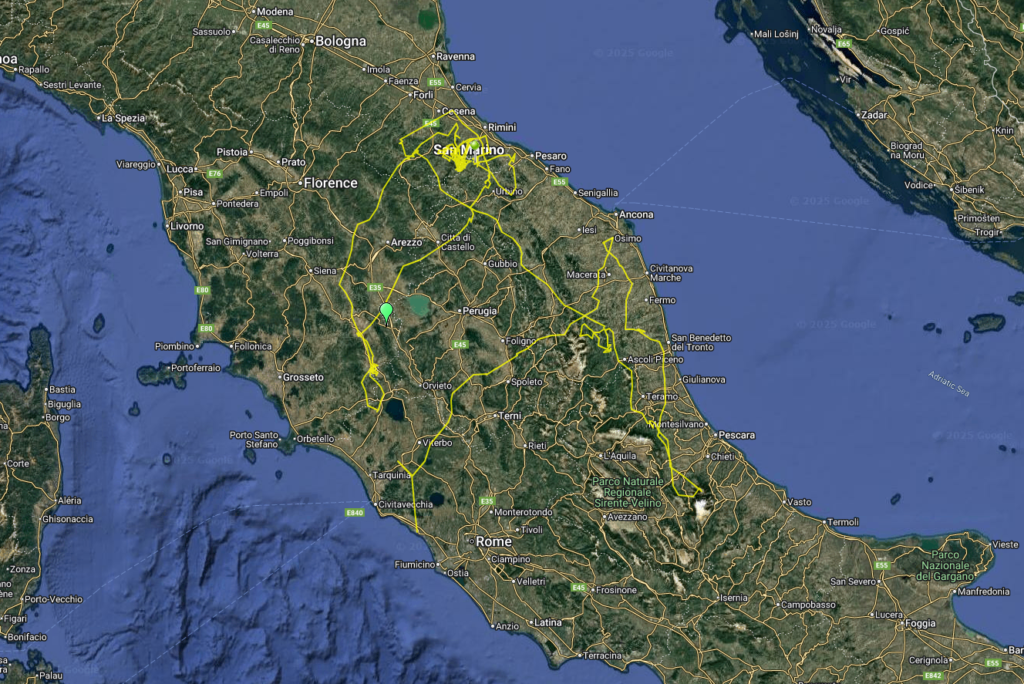
Monitoring this falcon allowed operators to visit a biodiversity-rich region populated by golden eagles, buzzards, honey buzzards, kestrels, and many other species. Drusilla, strong and proud, flew alongside other raptors, now free and far from her nest. Fully independent for over sixty days, she became the first Lanner falcon released via the controlled hacking method to reach autonomy without requiring rescue or food support—often necessary during early exploratory flights.
This achievement marks a turning point for conservation programs, confirming the effectiveness of a technique that could strengthen the prospects for protecting the species.
 EN
EN  IT
IT